Make Money Boring Again

Oct 20
3 min read
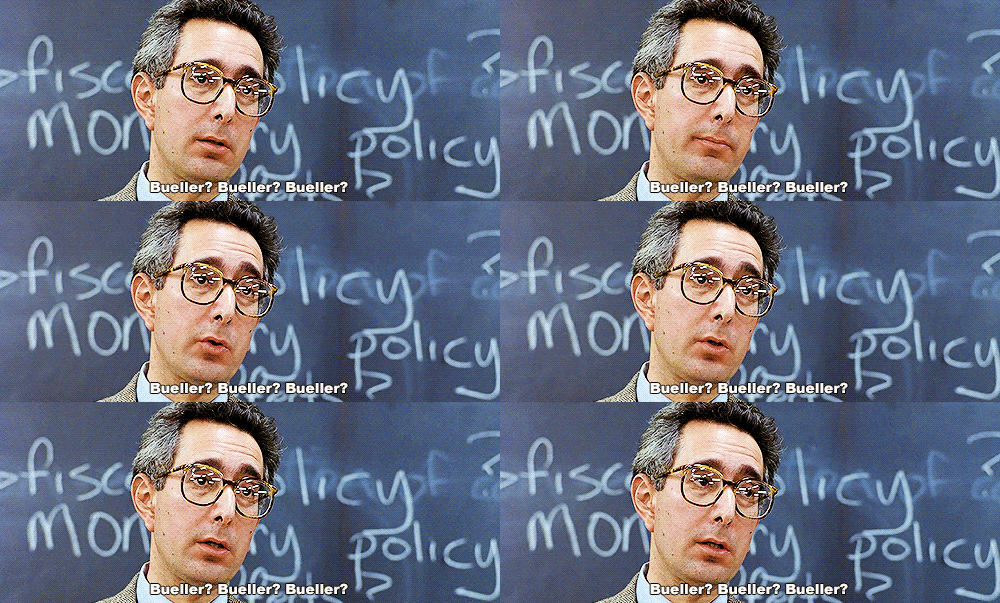
If your eyes glaze over when conversations about technology or finance get too technical, you’re not alone.
Most of us never think about the infrastructure we rely on every day. As long as your internet connection works and the money in your bank account doesn’t disappear overnight, there’s little reason to look under the hood.
Bitcoin is the exception. It sits at the intersection of technology and finance and gets plenty of attention, mostly for its wild price swings. Beneath all that excitement, however, is a technology that does remarkably little, plays by unwavering rules, and operates with extraordinary consistency.
Could Bitcoin’s most boring qualities also be its greatest strengths?
🧠 Why your money should be boring
Boring often gets a bad rap, but the systems we depend on most don’t need to impress us. They just need to work, day after day, without unpleasant surprises. That’s especially true of money, where trust is earned slowly and lost quickly.
Bitcoin's creator understood that for a new form of money to succeed, both its underlying technology and the rules governing it would need to stand the test of time.Three principles have guided Bitcoin from the very beginning, and they help explain why I, along with so many others, have come to trust it over the years.
Simplicity

In just nine pages, the Bitcoin white paper laid out a simple blueprint for a new form of digital money that anyone could own directly and send anywhere, without relying on a financial institution.
Unlike other blockchain networks, Bitcoin is not optimized to support a wide range of applications. It has largely resisted the temptation to do more. Rather than trying to be everything to everyone, its design prioritizes the qualities that make it useful as money, including scarcity, portability, and the ability for anyone to independently verify transactions. The goal isn’t innovation for its own sake. The goal is credibility.
Predictability

We've grown used to a financial system where the rules are constantly changing. Central banks adjust interest rates to stimulate or slow the economy, and governments pass laws and implement regulations that affect how money moves. When COVID brought the global economy to a standstill, both responded with extraordinary measures, including a massive expansion of the money supply.
Bitcoin works differently. Its supply is capped, and new bitcoin is issued on a fixed schedule. No central bank can decide to create more, and no CEO or developer can unilaterally rewrite the rules. Significant changes require broad agreement among participants across the Bitcoin network, a deliberately slow process that can take years.
Silicon Valley celebrates speed. But when your hard-earned savings are on the line, there's something reassuring about a technology that puts caution first.
Reliability

Perhaps Bitcoin's most boring feature is its clock-like rhythm. Roughly every ten minutes, a new batch of transactions is added to its public record, along with a predetermined amount of new bitcoin. Nobody has to wind the clock.
Bitcoin has run without a network interruption since 2013, following the same rules regardless of what’s happening in the world. In many parts of the world, that reliability stands in contrast to traditional financial markets and payment networks, where disruptions sometimes occur and human intervention is needed to get things working again.
Bottom line
We tend to measure technological progress by how much something changes. Money is different. Its value depends in part on our confidence that it will keep working as expected, and that the rules won't change without good reason.
Bitcoin isn't perfect, and its price is anything but predictable. But beneath the volatility is a technology that has spent nearly two decades quietly doing what it was designed to do.
Sometimes progress isn’t about what changes. It’s about protecting what doesn’t.
___________________________


Comments